반응형
Explore the core elements of Korean meals, from rice and porridge to dumplings and noodles.
Rice (밥)

Rice is the foundation of Korean meals. While white rice is most common, multigrain rice (잡곡밥) with barley, millet, sorghum, and beans is also popular. Special dishes like bibimbap mix rice with vegetables and meat.
Porridge and Gruel (죽, 미음, 응이)

- Porridge (죽): Boiled grains until soft and thick.
- Gruel (미음): Smooth strained version of boiled grains.
- Thin Gruel (응이): Water-dissolved grain starch, lightly boiled.
Ingredients include:
- Nuts & Seeds: Pine nuts, sesame, walnuts, soybeans
- Vegetables: Pumpkin, zucchini, shiitake mushrooms
- Seafood: Abalone, fish, clams, octopus
- Meats: Beef, chicken porridge
Dumplings and Rice Cake Soup (만두, 떡국)

Dumplings are made with wheat or buckwheat wrappers and filled with meat, vegetables, or tofu. Royal versions include Byeongsi and Gyuasang. Pyeonsu is a square dumpling with beef and mung beans.
Tteokguk, made from sliced rice cakes in broth, is traditionally eaten on New Year's Day.
Noodles (국수)
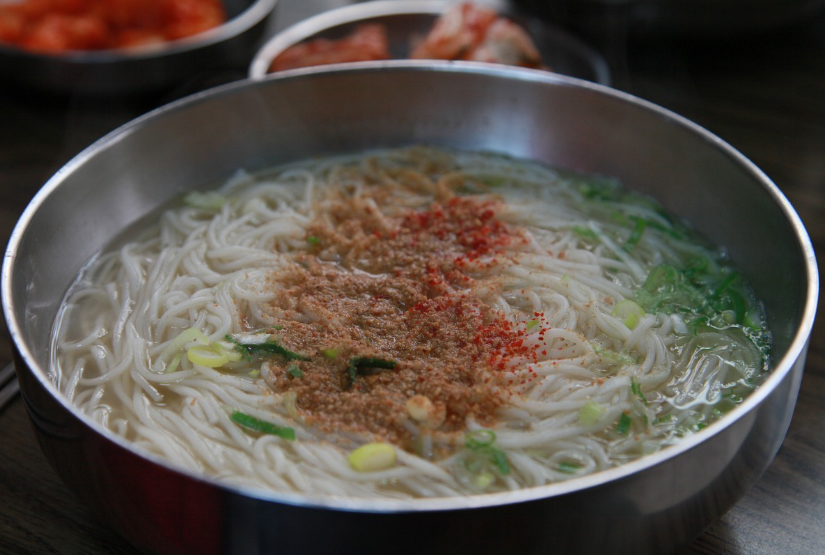
Korean noodles are diverse and served hot or cold:
- Wheat: Basic flour noodles
- Buckwheat: Used in naengmyeon
- Starch-based: Sweet potato or potato starch
Popular types include:
- Guksu Jangguk: Pheasant or beef broth noodle soup
- Kalguksu: Knife-cut noodles in chicken broth
- Naengmyeon: Cold buckwheat noodles
- Kongguksu: Cold soybean broth noodles
반응형
'Korean Food Insight > Korean Food Culture' 카테고리의 다른 글
| Korean “Hoesik” Culture and Drinking Etiquette (2) | 2025.05.18 |
|---|---|
| Free Side Dishes (Banchan) Refills and Self-Serve Water (0) | 2025.05.17 |
| How to Eat Like a Local in Korea: Korean Dining Etiquette Explained (2) | 2025.05.16 |
| The Secret Behind Korean Flavors: Exploring Traditional Korean Seasonings (Yangnyeom) (0) | 2025.05.14 |
| Discovering Korea's Spring Greens: A Fresh Taste of the Season (0) | 2025.05.11 |


